Share with:


New York Climate Week started in 2009, and back then we were just trying to get people to believe that climate change was real and that we should do something about it. Whilst I think for the most part we’ve at least managed to convince people that climate change is real, I’m not sure we’re winning the battle to get people to do something about it. It’s true, the price of renewables has fallen and build out is picking up pace. Most of us recycle and plastic straws are becoming rarer and rarer. But have we begun to tackle the fundamental systems that are keeping us locked in this cycle of increasing climate disasters? Are we going to stop responding to humanitarian disasters after the fact and start preparing for the future? After a week of meetings across topics as broad as fossil fuel phase out, transition minerals, humanitarian response, the just transition, culture and narrative, and climate resilience, I’m more convinced than ever that if we don’t start acting like development, humanitarian response, and climate change are all part of the same challenge, we’re doomed to watch what gains we’ve achieved get washed away in the new climate reality.
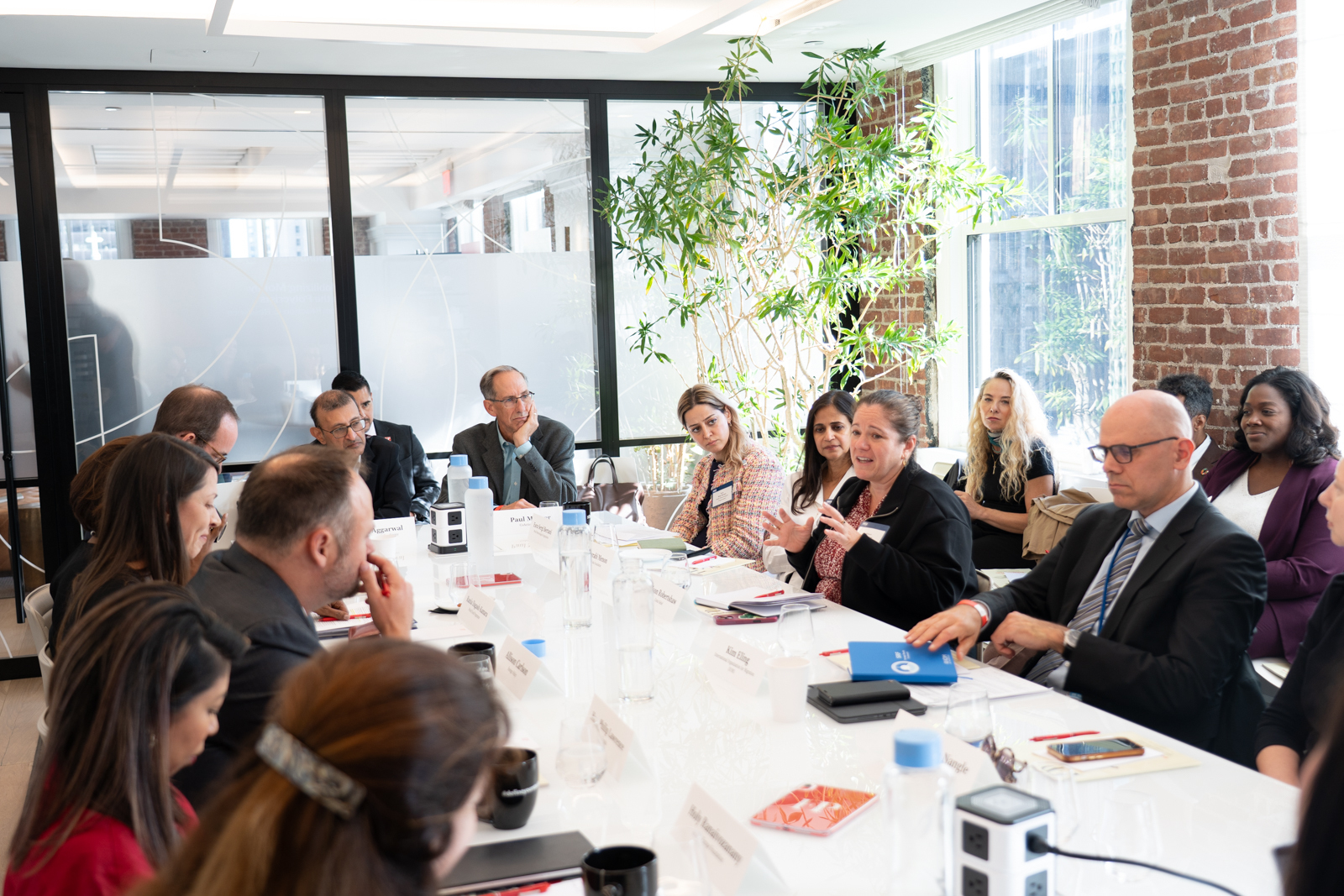
We’re staring down the barrel of one of the worst climate disasters we’ve ever seen. The current El Nino cycle is predicted to be beyond anything we’ve seen before—turbo charged by the climate change we’ve already baked into our atmosphere. Models are pointing to the possibility of close to a half of million dying of excessive heat, 50m people ending up food insecure. As was clear at our roundtable with Foreign Policy(opens in new window) during the week, the development and humanitarian community are likely to be unable to meet the need we’re going to see as funding cuts have decimated their ability to deliver emergency services. Donors are looking for returns on investment, increased efficiencies, and leaner organisations—despite the fact that more often than not they’re asking for increased reporting, greater hoops to accessing money, and an unwillingness to fund things with an intersectional lens.
And despite climate increasingly being the reason that these humanitarian disasters are happening, too much of the climate community (of which I have been in a part of for two decades, so share an equal part of the blame) acts like mitigating climate change can happen in a technology and policy bubble. Mitigation conversations too often happen with little thought to the narratives needed to bring people along on this journey; the need to build a world that is fairer and more just than the one that fossil fuels has funded; or that adaptation and resilience can no longer be looked at something unrelated to mitigation, but needs to be part and parcel of our efforts to put a stop to climate change.
What if, we actually started working together? And, yes, there was a lot of talk about collaboration last week in New York—but we’re past the phase where talking is enough. What if instead, every action we took from now on had to meet at least two objectives? If we looked at how our resilience work can help to drive down emissions every time we scoped a project? If we built our mitigation strategies in a way that didn’t just solve the technical problem, but instead also looked at how to shift the economic equation away from inequality? If we underpinned our economic development work by integrating climate resilience? If our humanitarian responses to disasters ensured that we build back with a changing climate in mind? Not in a theoretical sense, or just in our theories of change, but in every grant we make, every emergency response, every project we develop. It would require that we share learnings across silos, we talk to people outside our bubbles, and that we actively try to learn from different stakeholders and sectors, because we can’t afford to leave any potential wins on the table—our window closed on that years ago.
At Comic Relief we’re trying to do this in our Climate Justice programme across all our work. We’re layering on climate adaptation and anticipatory action onto our work on social protection systems across eight countries to ensure that every dollar spent on development helps build climate resilience in countries and communities. We’re trying to learn from the work of our Indigenous partners on how supporting on the ground communities can build both climate resilience and drive down emissions. We’re ensuring that our investments in maternal health and early childhood development take into account a changing climate to ensure our partners can deliver their much-needed services, even when climate disasters hit.
We’re not going to get it right every time, trying to master doing things a different way is never a linear process. Working this way takes intentionality and a willingness to learn from people with expertise in other sectors with their own vernacular and long-standing ways of doing things. We’re all going to need to become more flexible and expand what we consider our remit.
I don’t see any other way to navigate not only the coming El Nino, but the ever-increasing impacts of climate change. New York Climate Week highlighted to me, how far we are from really addressing the challenge in front of us, but it also offered a way to move forward, and the realisation that there is community of people who are trying to meet the challenge ahead of us—we just need to find a way to work together before it’s too late.
Allison Robertshaw
Head of Climate Justice at Comic Relief