Share with:


This blog was written by Farouk Alhassan, Programme Officer for the Capacity Development Unit at the West Africa Civil Society Institute (WACSI). In this piece, Farouk reflects on the Afrotellers Conference 2026, attended by representatives from Shifting the Power, a programme co-funded by the Foreign, Commonwealth and Development Office (FCDO) and Comic Relief, and co-created and co-led by Anchor Partners STAR Ghana Foundation, the West Africa Civil Society Institute (WACSI), Tilitonse Foundation and the Zambian Governance Foundation (ZGF).
Reflections from the Shifting the Power programme’s participation at Afrotellers Conference 2026

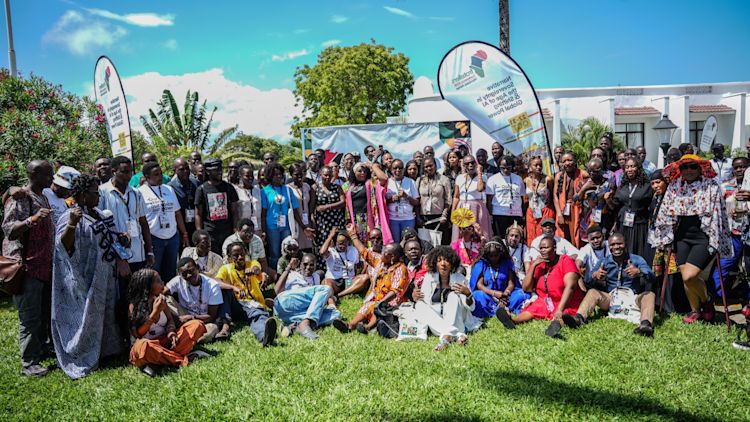
Afrotellers 2026 group picture
Whose Stories Are Being Told and Who Benefits?
Who gets to tell Africa’s stories? Who decides how communities are portrayed? Who profits from the knowledge and creativity those stories generate? More importantly, are African communities truly in control of the narratives that define them, shape development priorities and colour how the world sees them?
These questions ran through the Afrotellers Conference 2026, held in Mombasa, Kenya, from 27 to 31 October 2026 under the theme Narrative Sovereignty in the Age of AI and Shifting Global Power.
More than 200 storytellers, artists, researchers, activists, policymakers and development practitioners from over 24 African countries gathered for the conference. The Shifting the Power (StP) programme was represented by partners from Ghana, Malawi and Zambia, a chance to connect the programme’s commitment to locally led development with a wider conversation about African narratives, ownership, representation and influence.
The timing mattered. At the halfway point of this ten-year initiative, funded by the UK Foreign, Commonwealth and Development Office and Comic Relief, the conference prompted a sharper reflection on what shifting power means in practice. It is not only about changing funding relationships or strengthening local organisations. It is also about who controls the narratives about African communities, whose knowledge is valued and who has the authority to decide how stories are told, shared and used.
One message came through again and again: Africa does not lack stories. What is out of balance is who has the resources, platforms and authority to shape them and to benefit from their value.
For StP, this is not simply a question of communication. It is a question of power.
Here are some ideas that reframed the conversation.
1. Narrative Sovereignty
For civil society organisations (CSOs) and grassroots movements, storytelling is far more than a visibility tool. It shapes how communities are understood, how development priorities are set, whose experiences inform policy and where resources flow.
Yet in many interventions, communities appear as ‘beneficiaries’ or ‘subjects’ rather than as contributors who decide how their experiences are documented. Their photographs, testimonies and personal experiences demonstrate achievements, attract funding and communicate impact, while the organisations doing the documenting retain control of the process.
Opening the conference, Afrotellers Co-Founder and Executive Director Willson Chivhanga challenged this approach: “People who live the story must have the power to shape how it is told, how it travels, but also what it makes possible.”
This speaks directly to the Shifting the Power agenda. Local ownership is hollow when communities are invited only to give testimonies, join consultations or pose for project photographs while outsiders control how their experiences are interpreted and communicated.
2. Inclusive Storytelling
Narrative ownership cannot be separated from inclusion. Whose experiences are represented? Which voices are routinely overlooked? Who decides which stories matter?
Rachael Mwikali of Pussy Power urged participants to “move beyond narratives that portray African women and marginalised communities mainly through vulnerability and victimhood and to tell stories that recognise dignity, agency, leadership and the capacity to drive change.”
Her point sharpens an important distinction: inclusion is not about making sure marginalised groups appear in our communications. It is about enabling them to influence the narratives that concern them.
Let’s consider a community development intervention, for example. Instead of dwelling only on the challenges facing women, young people or vulnerable households, organisations can highlight their leadership, the solutions they design, the resources they mobilise and the changes they drive. That calls for honest questions about our own practice:
Can women, young people, persons with disabilities and other marginalised groups represent themselves?
Do they have real opportunities to review and approve how their experiences are presented?
Are their contributions acknowledged and their dignity protected?
It also calls for investment in grassroots movements, community-led media and the infrastructure that lets underrepresented groups tell their own stories safely and sustainably.
Ultimately, inclusive storytelling should not just give people a voice. It should shift the power to decide which voices are heard, how they are heard and what influence they have.

A participant wearing a Pussy Power T-shirt
3. Will Africa Be an Author or Merely a Source of Data in This Era of Artificial Intelligence?
Artificial intelligence (AI) adds a new dimension to the question. AI tools increasingly shape how information is produced, translated, distributed and consumed, yet big questions remain: who owns the data these systems learn from, whose languages and cultures do they reflect and who benefits from the value they create.
Dr McDonald Lewanika, Executive Director of Accountability Lab East and Southern Africa, urged participants to think beyond Africa’s participation in the AI age and consider its role in shaping it:
“The question before this room is not whether Africa will be part of the AI age; we already are. The question is whether we will be its authors or only its data.”
The risk is real: African communities supply cultural knowledge, languages, images and creative content to digital platforms without recognition, ownership or economic benefit. Dr Lewanika also urged participants to examine AI ownership, governance and accountability, and to understand who controls the technologies they adopt and whose interests those technologies serve.
4. Young People as Creators and Economic Actors, Not Just Audiences

Alimatu Sadia Nuhu of Hereafter Ghana
Shifting power also means recognising young people as contributors to Africa’s cultural, economic and technological future. Too often, development programmes engage them as participants, volunteers or beneficiaries, with little chance to influence decisions or benefit from what their creativity generates. The Afrotellers conference offered a different picture: young people as creators, innovators, entrepreneurs and active shapers of society.
Dr K.G. Moshugi of the University of the Witwatersrand’s Cultural Policy and Management Department encouraged young people to see themselves not as passive audiences of history but as active participants in what comes next. He also reminded delegates that storytelling is not only a cultural practice but an industry, with openings for employment, entrepreneurship, tourism and cultural exchange. Swahilipot put this into practice, giving young creatives safe spaces, room to develop their agency and pathways to turn creativity into sustainable livelihoods.
The lesson for CSOs and funders is clear. Supporting young people means more than inviting them to activities or sharing their success stories. It means investing in their ideas, skills, leadership and creative enterprises. Young people need more than platforms to speak; they need resources, networks, protection and decision-making space to influence the systems that affect their lives. Their creativity is an asset that can drive local economic development and strengthen Africa’s cultural and creative industries.
The TED Talks They Never Asked Us to Give
Now imagine more stories about farmers pioneering new practices, communities pooling their own resources and local organisations solving the problems of everyday life. Six speakers from the Shifting the Power programme offered exactly that.

Marrian Kwiya Kafuni, one of the speakers from Zambia
Zambia: Farmers as Innovators, Not Dependents
Maambo Bhagoos and Marrian Kwiya Kafuni, grant partners of the Shifting the Power programme in Zambia, challenged the familiar image of African farmers as vulnerable people waiting for outside support. Drawing on their own experiences, they showed how farmers are adopting innovative, climate-friendly practices that raise productivity, protect the environment and strengthen livelihoods. Their stories made a clear case: farmers are not merely recipients of development interventions but innovators and drivers of climate resilience, and their knowledge and solutions deserve far greater recognition and investment.
Malawi: Turning Local Knowledge into Stories That Move People
Nelson Kondowe of Life Concern and Treaser Nyirenda of Youth Response for Social Change (YRSC), representing Malawi grant partners, spoke to the power of storytelling in making community experience and organisational knowledge visible. They showed how evidence from monitoring, evaluations and community engagement can travel beyond reports and statistics to convey real-life experiences, local innovations and lessons that influence decisions. Their contributions reinforced a vital point: communities and grassroots organisations are important sources of knowledge and solutions to Africa’s development challenges.
Ghana: Communities Leading Their Own Development
Alimatu Sadia Nuhu of Hereafter Ghana shared inspiring examples of communities in Northern Ghana mobilising their own resources to build schools, healthcare facilities and bridges, support children’s health insurance and pay school fees. Her story overturned the perception of communities as passive beneficiaries, presenting them instead as active investors and architects of their own development.
Jerry Sam of Penplusbytes complemented this by exploring how artificial intelligence can help grassroots organisations strengthen communication, mobilise resources and reach wider audiences, while raising important questions about data ownership, representation and accountability. Together, the two talks underscored the need to strengthen local agency and to ensure that African organisations retain ownership of the stories, knowledge and technologies shaping their development.
Three Lessons About Shifting Power
The six speakers answered shared questions: which stories deserve more visibility, what inspired their storytelling, which dominant narratives need challenging, which stories communities should preserve and whether AI can be a force for good. Three lessons stood out.
Local knowledge deserves recognition and investment. Zambia’s farmers show that communities hold practical solutions to climate change and food insecurity. Development organisations should treat this knowledge as a foundation, not as supplementary evidence.
Communities are agents of change, not only beneficiaries. Northern Ghana shows what local ownership looks like when people mobilise resources and invest in their own education and health.
Technology must strengthen local ownership. Responsible AI use needs attention to consent, inclusion and accountability. Shifting power must include shifting narrative authority.
From Extractive Storytelling to Ethical and Community-Led Communication
CSOs, donors and international development organisations produce a steady stream of stories, photographs, case studies, reports and impact narratives. These are essential for accountability, learning, advocacy and resource mobilisation. But the processes that produce them do not always reflect the local ownership and accountability that the sector preaches.
A story can be factually accurate and still be extractive if the people it represents have little control over how it is presented or used. A photograph can win attention and illustrate impact while exposing a person or community to risks they never fully understood or consented to.
The conversations in Mombasa invite development actors to rethink their storytelling practice in four ways.
Make communities partners in documenting their experiences. Community members should help decide which stories are told, how their experiences are presented and where the content will be used. Informed consent should be an ongoing process, not a signature collected before the camera rolls.
Move beyond narratives of vulnerability. It matters to communicate the challenges communities face, but organisations should avoid presenting people as helpless or dependent. Stories should also show local leadership, innovation, resilience, knowledge and the solutions communities are developing.
Promote shared ownership and recognition. Communities contribute knowledge, experiences, time and creativity to development work. Their contributions should be acknowledged and they should have a real say in how the resulting content is shared and used. Organisations should consider how to strengthen community-led communication, local creative capacity and fair recognition of intellectual contributions.
Invest in the people and systems behind the stories. Funding should not stop at producing communication materials or documenting results. It should also strengthen local organisations’ communication capacity, digital literacy, safeguarding systems, storytelling infrastructure and access to appropriate platforms.
These shifts matter most for funders. If locally led development is a genuine commitment, funding arrangements should let local organisations and communities influence not only how programmes are implemented but also how progress, challenges and impact are defined and communicated.

An artist performing at the conference
What This Means for the Shifting the Power Programme and Its Partners
The Afrotellers Conference reinforced the need to address power at several levels at once: institutional, financial, political and narrative.
Strengthening civil society is not only about better systems, governance, financial management or programme delivery. It is also about enabling local organisations and communities to define their own priorities, generate and communicate their own knowledge, influence public narratives and take part meaningfully in decisions about their futures.
Having partners from Ghana, Malawi and Zambia in the room allowed the Shifting the Power programme to test these principles against real experience. It also underlined the value of spaces where civil society actors, grassroots movements, creatives and other stakeholders can swap experiences, build alliances and shape shared approaches to change.
Looking ahead, the programme and its partners could strengthen ethical, locally led storytelling by:
encouraging partners to document community-led change;
strengthening communities’ communication and digital capacities;
creating opportunities for young people and marginalised groups to lead storytelling initiatives; and
promoting more equitable relationships between local organisations and their funding partners.
For donors and international development organisations, the challenge is just as pressing. Supporting local ownership must go beyond who implements a project or receives funding. It must also cover who defines success, who interprets evidence, who communicates results and who controls the narratives that emerge.
Shifting Power Also Means Shifting Narrative Authority

An artist during the conference
The Afrotellers Conference 2026 left us with a simple but demanding idea: shifting power is not only about who controls funding, institutions or development decisions. It is also about who has the authority to tell Africa’s stories, whose knowledge counts and who benefits from the value those stories create.
African stories are not content for external audiences, tools for securing funding or products for showcasing project achievements. They are expressions of identity, knowledge, creativity, dignity and power.
For civil society organisations, that means a deliberate shift from telling stories about communities to creating the conditions for communities to tell and own their stories. For donors and development partners, it means moving beyond financing visibility to investing in the people, movements, capacities and systems that make narrative sovereignty possible. And for Shifting the Power and its partners in Ghana, Malawi and Zambia, it remains a vital part of building a more equitable, locally driven civil society.
The real test of narrative sovereignty is not whether African stories are being told. It is whether African communities have the power to tell them on their own terms, shape how they are understood and benefit from the value they create.
About the Author

Farouk Alhassan moderating the TED Talk session
Farouk Alhassan is a seasoned development professional currently serving as Programme Officer at the West Africa Civil Society Institute (WACSI). Based in Accra, Ghana, he brings years of experience working with both profit and non-profit organisations across Africa, with specialised expertise in capacity development, community engagement and project implementation. His work focuses on strengthening civil society in sectors such as biodiversity, education, health and gender equality, ensuring that programmes are both impactful and sustainable. Beyond his professional expertise, Farouk is committed to mentoring emerging leaders and fostering youth participation in governance and civil society. Fluent in both English and French, he navigates cross-cultural contexts with ease, bridging communication gaps and strengthening collaborations across West Africa.