Share with:


Shifting Cultures Festival: Creating Spaces That Matter
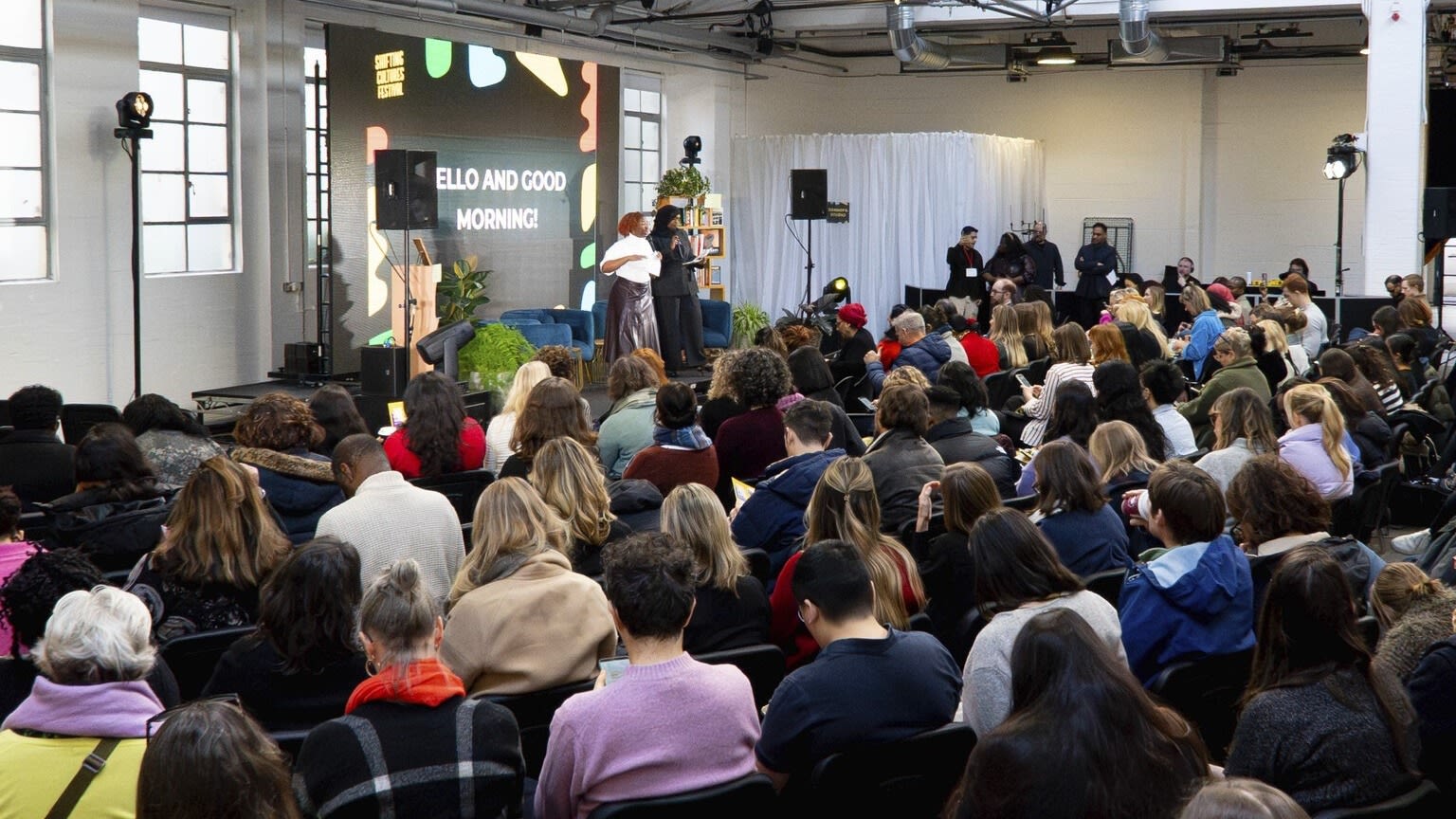
It is not every day over 400 people gather with the shared aim of sowing seeds of hope. However, the Shifting Cultures Festival, hosted by the Power of Pop Fund and the Shifting the Power Programme, set out to do exactly that. Just over a month ago, I braved a freezing January morning to volunteer at the Shifting Cultures Festival. Along with 20 other volunteers, we put our precision skills to the test transforming a blank canvas of a space into a social justice festival.

As a member of the POP Fund Community Council, the idea for a festival was first raised to me in one of our council meetings just over a year ago. It was an ambitious goal that aligned with the fund’s commitment to strengthen our creative ecosystem. Seeing that initial vision grow into the vibrant festival has been a powerful reminder of why it is important to not only invest in, but also to celebrate the cultural work being done in our communities.
Lifting Up the Curtain
On that Thursday morning, the crowds started to pour in. I found myself front of house, scanning tickets and welcoming guests even as someone who typically avoids talking to strangers. The infectious energy of the organisers kept us going, as well as the insightful panels and thought-provoking workshops, delicious food and unforgettable vibes.
What was particularly notable was the breadth of people interested in the event. The Shifting Cultures Festival brought together creatives, changemakers, cultural strategists and funders who all value the transformative impact of pop culture. The event examined how entertainment and media holds influence and power to make real change, in addition to its entertainment value. Additionally, the event highlighted the importance of authentic stories and amplifying the voices of those with lived experience of injustice.
As someone building a career in television, I’ve often struggled to balance my professional work with my commitment to activism, but being in a space that openly explored the power of the media whilst centring justice, lived experience and cultural change was incredibly affirming. Hearing from people who have successfully woven together storytelling and social impact and have managed to not treat them as competing priorities but as mutually strengthening forces, has inspired me. It reinforced and demonstrated to me how the industry I’m working in doesn’t have to sit apart from my values and activism but can be one of the most powerful vehicles for them.

Key Highlights
The sessions took place over three studios, the Sankofa Studio, Umoja Studio and Zen Studio. The audience had a tough time selecting between the enticing sessions on offer. Some of my personal highlights were:
Colin McFarlane’s keynote talk on the Justice for Windrush campaign
The dynamic but healthy discussion about crafting your own lane with Simone Pennant, Leo Oliva, Sarah Asante and Kimberly McIntosh
The Stories that Shift panel with Maxine Thomas-Asante, Lucy Stone, Waad Al Kateab, Nathalie McDermott and Kaio Grizzelle, that also showcased the incredible ‘For Sama’ film
Heard’s workshop that explored how stories can shift perspectives and move audiences
Collaborating internationally with changemakers from Ghana, Zambia and Malawi

Takeaways From the Day

Throughout the day, what stuck out to me was how intentional everything felt as every panel, workshop and performances centred marginalised or misrepresented voices. People spoke candidly about the power and responsibility that comes working within the intersections of storytelling, culture, social change, and community leadership. Even the wellbeing space provided on the day showed that care wasn’t an afterthought but at the forefront of organisers minds.
Across all the works showcased at the festival, pop culture was praised as a tool that can shape opinions, inform policy debates, and influence audiences. The event demonstrated what responsible storytelling should look like; not only the scale of your platform, but your intention and genuine regard to the community you’re serving. This accountability to our communities is something important for mainstream institutions as well as individual creatives. Leaving the event, I did sense a call to action for large scale media institutions, who wield enormous influence and power not just for their economic contributions but for their social impact ones too.
What Would a Healthy Creative Industry Look Like?
Over the last few years, I have had the joy of working in the TV industry. As a result, the Shifting Cultures Festival, and the recent events following, have left me with some thoughts about what we need for healthy creative industries in the UK. If anything, the recent BAFTA controversy has reminded me that influence needs to be wielded carefully, inclusively, and with respect to all the audiences it reaches. Pop culture is a powerful tool, and entertainment matters to people. Institutions, big or small, need to nurture and protect their audiences, prioritise inclusion, care and accountability. This accountability sets the standard for how stories, and the people telling them, are represented and treated in our broader society. The lack of sensitivity marginalised communities often experience highlights why spaces like the Shifting Cultures Festival matter. If we want a creative ecosystem that truly reflects the richness and complexity of our society, we need to invest in the care and support for the people behind them. Aspiring to a better industry should not be dependent on individuals, but instead part of an inclusive vision for a better future.